



How to Choose a Curing Light for Your Dental Practice: The brief idea from Dentalness.in
How to Choose a Curing Light for Your Dental Practice: The brief idea from Dentalness.in
Curing lights may look simple, but they’re one of the most critical tools in restorative dentistry. Whether you're placing composites, bonding brackets, or sealing fissures, the right curing light ensures strong, reliable results. But with so many types, features, and price points available, how do you choose the best one for your clinic?
At Dentalness.in, we help dental professionals make smart equipment choices every day. Here’s your practical guide to choosing a curing light that delivers performance, durability, and value.
What Is a Dental Curing Light?
A curing light polymerizes (hardens) light-sensitive resin materials used in procedures like:
- Composite restorations
- Sealants
- Orthodontic bonding
- Cementation of veneers and crowns
The light activates photoinitiators in the resin, triggering the hardening process. Proper curing is crucial—under-curing can lead to restoration failure, sensitivity, and recurrent decay.
Types of Dental Curing Lights
- Pros: Affordable, broad wavelength range
- Cons: Bulky, slower curing time, high heat generation
- Ideal for: Occasional use or as a backup unit
- Pros: Fast curing, energy-efficient, low heat, compact
- Cons: Narrower wavelength range (check compatibility with resin)
- Ideal for: Most modern restorative practices
- Pros: Extremely fast curing (seconds)
- Cons: Expensive, limited indications
- Ideal for: High-volume esthetic practices (not commonly used today)
Key Factors to Consider
Most modern composites require a wavelength of 430–490 nm to activate camphorquinone, the common photoinitiator.
Dentalness Tip: If you use specialized or dual-cure resins, choose a broad-spectrum light (e.g., 385–515 nm) to cover additional initiators like PPD or TPO.
Measured in mW/cm², intensity affects curing speed and depth:
- Standard: ~800–1,200 mW/cm²
- High-power: 1,200–3,000+ mW/cm²
More isn’t always better—over-curing can generate heat and stress the restoration. Choose a light with adjustable modes (standard, ramp-up, pulse).
Look for options such as:
- Ramp mode:Reduces shrinkage stress by slowly increasing intensity
- Pulse mode:Minimizes heat generation
- Turbo mode:For quick curing in seconds
Timer presets (5, 10, 20 sec) are also helpful for consistent results.
- Cordless models:Offer flexibility and ease of use
- Lightweight design:Reduces operator fatigue
- Long battery life:Important for busy clinics
Dentalness Tip: Always keep a spare curing light charged and ready as a backup.
The diameter and shape of the curing tip affect:
- Accessibility to posterior teeth
- Beam focus and curing accuracy
- Cross-contamination risk (check for autoclavable tips)
Buy from brands known for:
- Consistent performance
- Repair and replacement availability
- Compatibility with your existing composite systems
At Dentalness.in, we offer only vetted curing lights with service support across India.
Why Buy Your Curing Light from Dentalness.in?
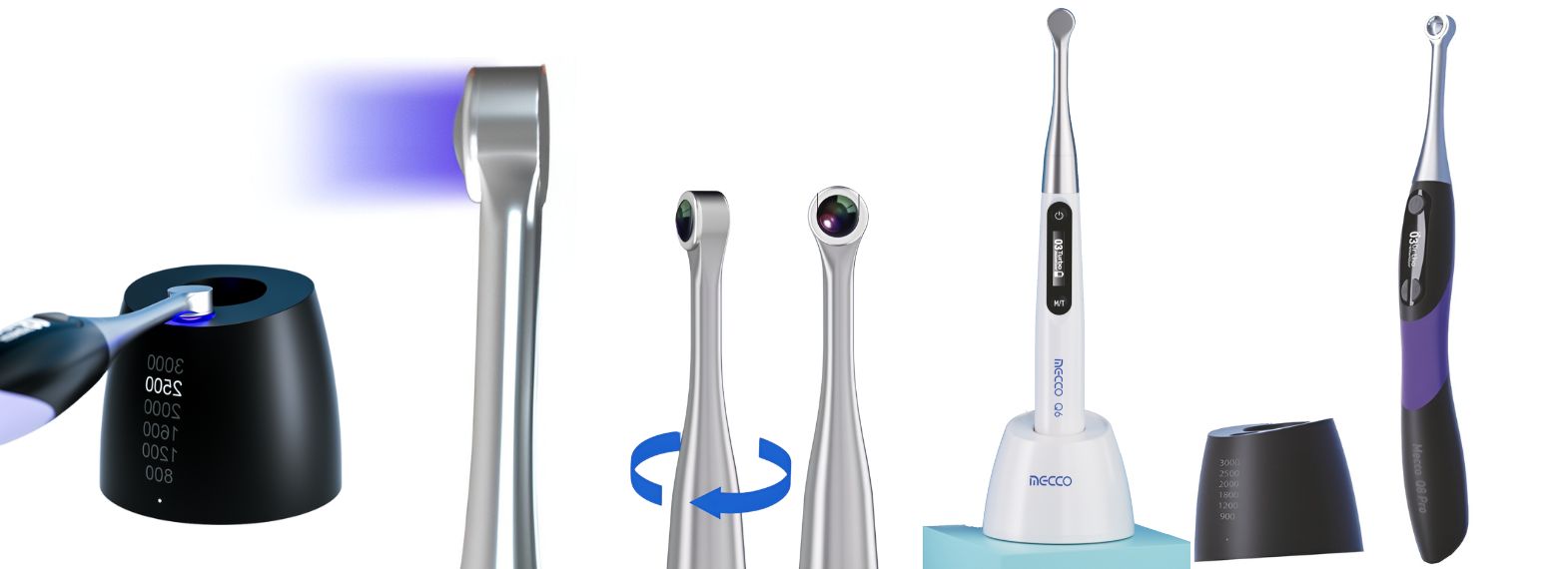
We have two option which serves all the needs of dentist one is
Quick Checklist: What to Look for
| Feature | Ideal Specs |
|---|---|
| Wavelength Range | 430–490 nm (or broader) |
| Intensity | 1,000–2,000 mW/cm² (adjustable) |
| Modes | Standard, ramp-up, turbo |
| Battery Life | 60–120 minutes per charge |
| Tip Design | Slim, autoclavable, angled |
| Build Quality | Lightweight, ergonomic |
Conclusion: Invest in a Curing Light That Works as Hard as You Do
A curing light isn’t just a tool—it’s your insurance policy for long-lasting restorations. Choose a device that matches your clinical workload, supports your materials, and enhances your workflow.
Ready to upgrade or compare models?
Explore top-rated curing lights now on Dentalness.in